
Cleaner media.
Tighter control.
More stable hardening.
Luore Technology purifies and controls heat-treatment quenching media — molten salt, quench oil and salt-bath water content — turning media maintenance from experience into a measurable, repeatable and traceable process.
Three services, one chain from dirty to precise
Two variables decide the cooling curve — cleanliness and water content. We hold each of them with a dedicated, on-site service.
Molten salt filtration
SALT BATHPump-driven high-pressure filtration pulls oxide scale, sludge and carbon black out of the bath and returns clean salt. Staged screens from 20 mesh, with a 3–4 person watch and sampling every four hours.
Details 02Quench oil purification
QUENCH OILAn external filter loop on the quench tank, 20 μm rating, no shutdown. Removes debris, sludge and carbon black to bring quenching severity back into window.
Details 03Salt-water concentration control
CONCENTRATIONBuoyancy and temperature sampled together; PLC differencing removes thermal drift, displays water content in real time and closes the make-up loop.
DetailsQuenching media is the process most often left to feel
The bath looks fine from the walkway. The problems hide in the numbers you cannot see until the parts fail inspection.
| What you see | What it costs | How we handle it |
|---|---|---|
| Sludge and scale build-up in the salt bath | Cooling rate drifts; soft spots and distortion appear | Pump-driven filtration with staged 20 / 10 mesh screens, verified by sampling |
| Carbon black and sludge rising in quench oil | Severity drops, hardness scatter widens, oil life shortens | External 20 μm loop on the tank, running without shutdown |
| Make-up water added by experience | Gravimetric test takes 1.3–4 h and lags the process | Two-parameter on-line measurement, ±0.02 % display, PID make-up |
From measurement to make-up water, closed at the tank side
Salt density responds to both temperature and water content, in the same direction. Buoyancy alone cannot separate “more water” from “hotter salt”. We separate them by two-parameter differencing.
Sense
Buoyancy and temperature sampled together
Convert
Normalised to 0–10 V, zero and span set
Compute
Differencing removes drift; ten-segment correction
Act
PID drives the make-up pump or solenoid
Feedback
Live display, paperless recording, alarms
Figures come from existing project records; actual results depend on bath condition, medium and process parameters. Invention patent application no. 2026116812083 (accepted).
The work happens at someone else’s tank side
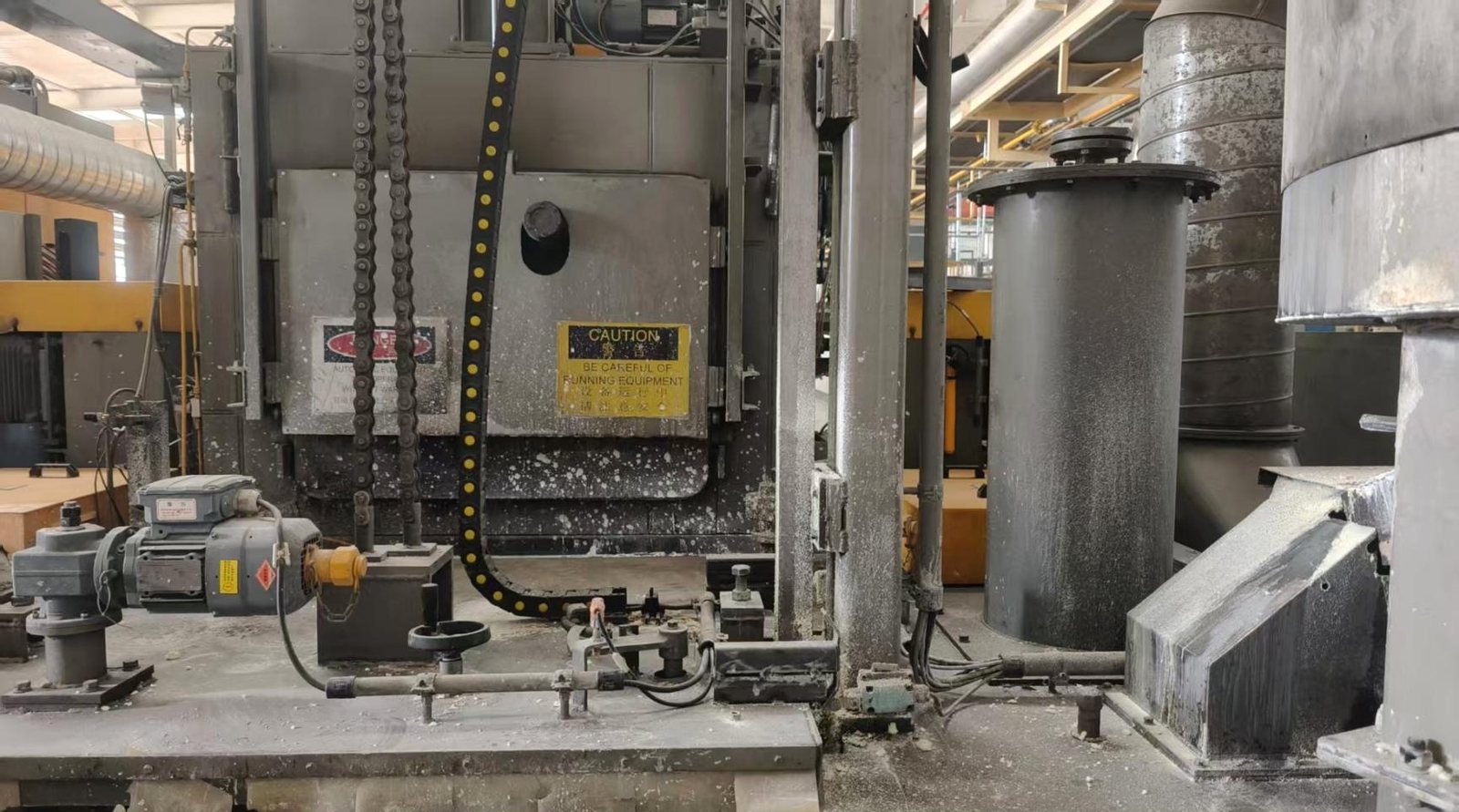
Luoling Bearing
Eighteen days of continuous on-line filtration turned a black, turbid salt bath into a clear one.
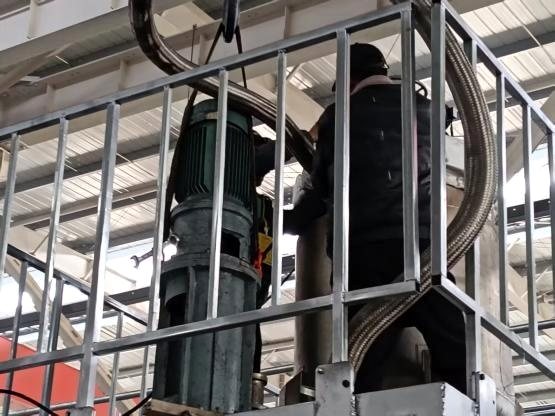
Hongyuan Bearing
Installation, two-stage filtration and furnace cleaning completed in four days; both customer re-checks passed.
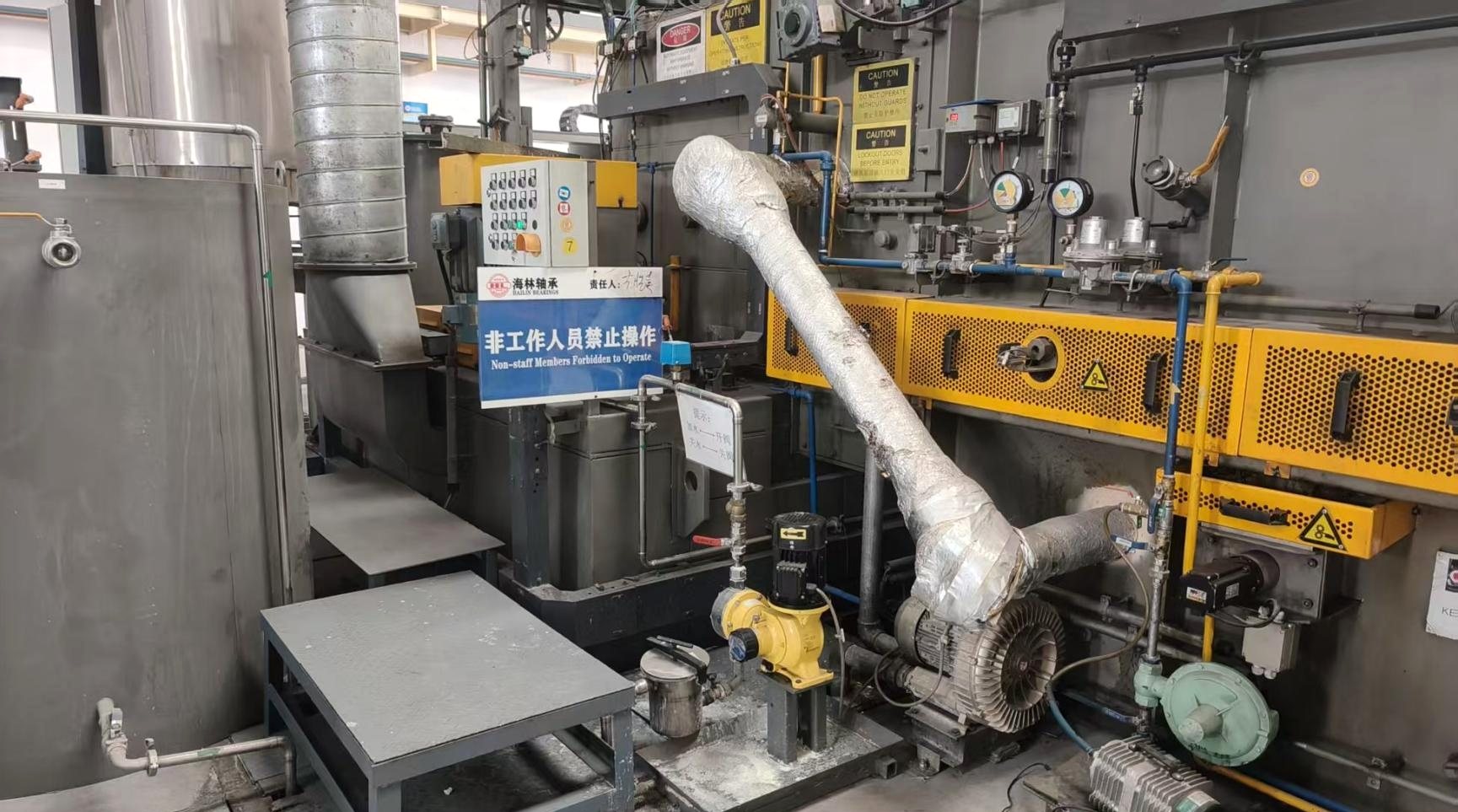
Hailin Zhongke
A cross-province campaign: transfer filtration plus furnace cleaning, both passed re-inspection — followed by a quench-oil filtration contract.
Without data, “stable” is just a word
We have built a hardened-depth testing system around GB/T 9450-2025 and GB/T 5617-2025: sampling, preparation, gradient acquisition, interpolated evaluation and non-conformance review, all under one traceable flow.
- CHD (carburised) and SHD (surface hardened) covered by separate work instructions
- Report, raw record, gradient sheet and 8D review form for each standard
- MvImage acquisition, with manual interpolation as the deciding method
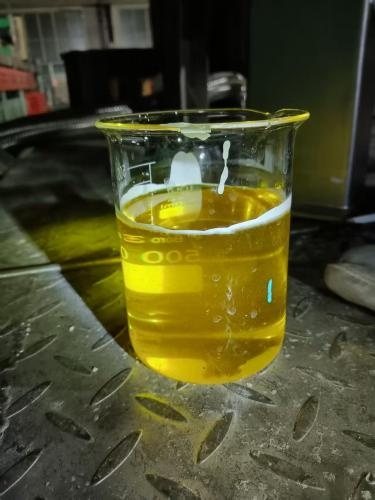
Salt sample after filtration · Tianshui 2026
Tell us what your bath is doing.
We will tell you what to do next.
One call is enough to establish three things: where your bath stands today, which step comes first, and how long it takes.